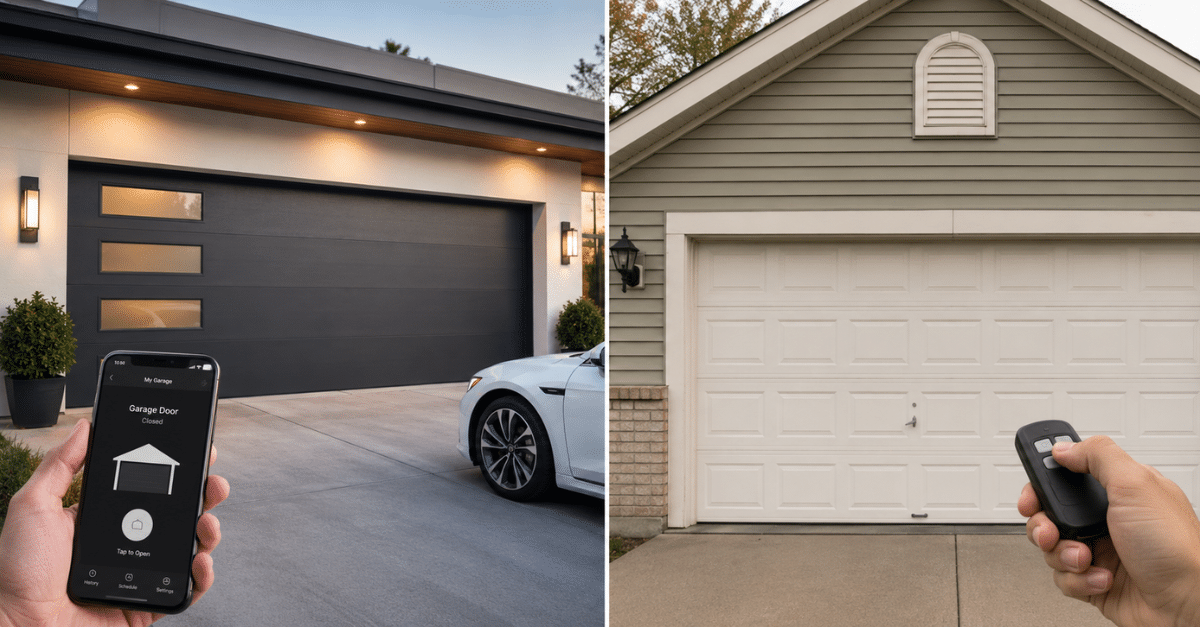
Garage doors have come a long way over the years. What was once a simple manual entry system has now evolved into a high-tech feature packed with automation, security tools, and smartphone connectivity. Today, homeowners often face an important question: should they choose smart garage doors or stick with traditional garage doors?
The answer depends on several factors, including budget, convenience, security needs, and long-term maintenance expectations. While traditional garage doors still offer reliability and simplicity, smart garage doors provide advanced technology designed for modern lifestyles.
In this guide, we’ll compare smart garage doors vs traditional garage doors in detail so homeowners can better understand which option fits their needs.
What Are Traditional Garage Doors?
Traditional garage doors are standard garage door systems that operate manually or with a basic remote-controlled opener. These doors have been used in homes for decades because they are dependable and relatively affordable.
Most traditional systems include:
- A garage door opener
- Remote controls
- Basic locking mechanisms
- Standard safety sensors
- Manual operation capability
Although traditional garage doors may lack modern connectivity features, they still perform the essential job of protecting vehicles and securing the garage space.
How Traditional Garage Doors Work
Traditional garage doors use springs, tracks, rollers, and an electric opener to move the door up and down. The user typically opens the door using a wall switch or handheld remote.
Once activated, the opener motor lifts the door along the tracks until fully open. The system then closes the door when triggered again.
Because these systems are straightforward, repairs and maintenance are usually less complicated compared to advanced smart systems.
What Are Smart Garage Doors?
Smart garage doors combine traditional garage door mechanics with internet-connected technology. They allow homeowners to monitor and control their garage doors remotely using smartphones, tablets, or voice assistants.
A smart garage door opener connects to a home Wi-Fi network and communicates through a mobile app.
Many modern garage doors now include features such as:
- Smartphone control
- Real-time activity alerts
- Remote opening and closing
- Voice assistant integration
- Scheduled operation
- Security monitoring
- Guest access management
These features make smart garage doors especially attractive for busy households and tech-savvy homeowners.
Smart Garage Doors vs Traditional Garage Doors: Key Differences
Although both systems perform the same basic function, the experience of using them can feel very different.
Convenience and Accessibility
One of the biggest advantages of smart garage doors is convenience.
With a smart garage door opener, homeowners can control the door from almost anywhere. Forgot to close the garage door after leaving home? A smartphone app can fix that instantly.
Traditional garage doors, on the other hand, require physical remotes or wall-mounted controls. If you lose the remote or forget to close the door, you may need to return home to check it manually.
For families with multiple drivers or busy schedules, smart garage doors often make daily life easier.
Security Features
Security is another major difference when comparing smart garage doors vs traditional garage doors.
Smart Garage Door Security
Smart systems offer advanced security features such as:
- Real-time notifications
- Motion detection alerts
- Activity logs
- Automatic closing timers
- Remote lock controls
Some systems even integrate with home security cameras and smart home platforms.
As a result, homeowners can monitor garage activity even while traveling.
Traditional Garage Door Security
Traditional garage doors usually rely on basic locking systems and opener codes. While modern openers still include rolling-code technology, they do not offer live monitoring or remote alerts.
For homeowners focused on advanced security, smart systems provide more control and visibility.
Installation Complexity
Traditional garage doors are generally simpler to install. Because the systems involve fewer electronic components, installation is often faster and less expensive.
Smart garage doors require additional setup steps, including:
- Wi-Fi configuration
- Mobile app installation
- Smart home integration
- Software updates
Although installation is still manageable, some homeowners may prefer professional setup to ensure everything works properly.
Cost Comparison
Budget plays a major role in the decision-making process.
Traditional Garage Door Costs
Traditional garage doors are usually more affordable upfront. Since they use simpler hardware and fewer electronic features, the overall installation cost tends to stay lower.
Maintenance costs are also often predictable and straightforward.
Smart Garage Door Costs
Smart garage doors typically cost more because of added technology and connectivity features.
However, many homeowners view the extra investment as worthwhile due to the convenience and security benefits.
In some cases, existing traditional garage doors can be upgraded with a smart garage door opener instead of replacing the entire system.
Maintenance and Repairs
Every garage door system requires occasional maintenance. However, the type of maintenance differs between smart and traditional systems.
Traditional Garage Door Maintenance
Traditional garage doors mainly need mechanical maintenance such as:
- Lubricating moving parts
- Adjusting springs
- Replacing worn rollers
- Inspecting tracks
Because the systems are less complex, troubleshooting is often easier.
Smart Garage Door Maintenance
Smart garage doors require both mechanical and digital maintenance.
Homeowners may occasionally need to:
- Update apps or firmware
- Reconnect Wi-Fi
- Reset system settings
- Troubleshoot connectivity issues
Although these tasks are usually minor, they add another layer of responsibility.
Reliability During Power or Internet Outages
This is an area where traditional garage doors sometimes hold an advantage.
Traditional systems continue working normally as long as electricity is available. Even during opener failures, the manual release allows homeowners to operate the door manually.
Smart garage doors still function mechanically, but certain remote features may stop working during internet outages.
Fortunately, most smart systems include backup controls and manual operation options.
Energy Efficiency and Modern Technology
Modern garage doors increasingly focus on energy efficiency.
Many smart garage doors come with insulated panels, energy-saving modes, and automatic scheduling features. These additions can help maintain indoor temperatures and reduce energy loss.
Traditional garage doors can also be energy efficient, but smart systems often provide more control over operation and monitoring.
Which Option Is Better for Families?
Families often benefit greatly from smart garage doors.
For example, parents can:
- Receive alerts when children arrive home
- Open the garage remotely for deliveries
- Monitor garage access in real time
- Share temporary access with guests
These features improve convenience while also increasing peace of mind.
However, some homeowners prefer the simplicity of traditional garage doors because they involve fewer digital systems and less technical troubleshooting.
Smart Home Integration
One area where smart garage doors clearly stand out is smart home compatibility.
Many smart systems work with platforms like:
- Google Assistant
- Amazon Alexa
- Apple HomeKit
This integration allows homeowners to include the garage door in larger home automation routines.
For example, the garage door can automatically close at night or activate lights when opened.
Traditional garage doors cannot offer this level of automation without upgrades.
Long-Term Value
When evaluating long-term value, both options have strengths.
Traditional garage doors offer:
- Lower upfront costs
- Simpler maintenance
- Reliable operation
- Easy repairs
Meanwhile, smart garage doors provide:
- Enhanced security
- Greater convenience
- Remote monitoring
- Advanced automation
- Modern home appeal
For homeowners planning to stay in their homes long term, smart garage door technology may increase overall property appeal and functionality.
Are Smart Garage Doors Worth It?
For many homeowners, the answer is yes.
The ability to control and monitor the garage remotely adds convenience that traditional systems simply cannot match. Smart garage doors also improve security and integrate smoothly with modern smart homes.
However, not everyone needs advanced technology. Some homeowners prefer traditional garage doors because they are reliable, affordable, and easy to maintain.
Ultimately, the best choice depends on personal priorities, budget, and lifestyle.
Conclusion
The debate between smart garage doors vs traditional garage doors comes down to balancing simplicity with modern convenience.
Traditional garage doors remain dependable, cost-effective, and straightforward. They continue to serve millions of homeowners well with minimal complications.
On the other hand, smart garage doors bring advanced technology, remote access, and enhanced security into everyday life. They are ideal for homeowners who value automation, connectivity, and modern features.
Before making a decision, consider how you use your garage daily, what level of security you want, and whether smart technology fits your lifestyle. Both options can provide excellent performance when properly installed and maintained.
FAQs
Q: What is the difference between smart garage doors and traditional garage doors?
A: Smart garage doors connect to Wi-Fi and allow remote control through mobile apps, while traditional garage doors rely on standard remotes or manual controls.
Q: Are smart garage doors safer?
A: Smart garage doors often provide better security through real-time alerts, activity monitoring, and remote access controls.
Q: Can I convert my traditional garage door into a smart garage door?
A: Yes. Many homeowners upgrade existing systems by installing a smart garage door opener compatible with their current door.
Q: Do smart garage doors work without internet?
A: Most smart garage doors still operate manually or with local controls during internet outages, but remote smartphone features may be unavailable.
Q: Are smart garage doors expensive to maintain?
A: Maintenance costs are usually moderate, although smart systems may occasionally require software updates or connectivity troubleshooting in addition to normal mechanical maintenance.