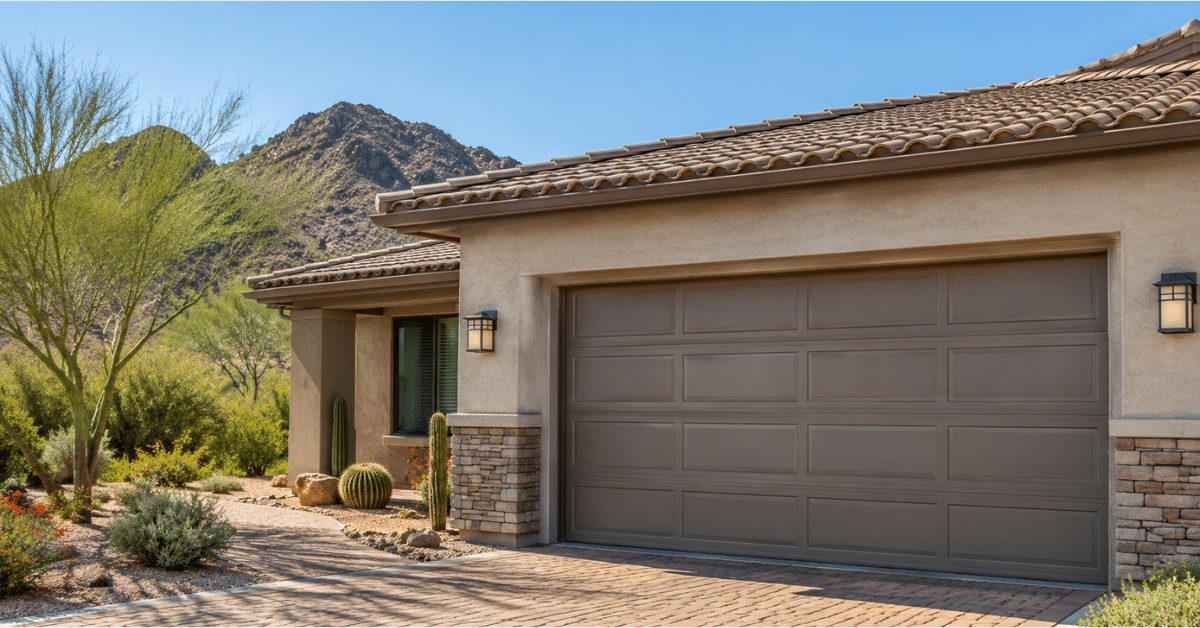
Finding the best garage doors for hot climates is not as simple as picking the most expensive option in the showroom. The wrong door — even a beautiful, well-built one — can warp under Texas sun, fade within two seasons, transfer heat into your home relentlessly, and accelerate the failure of every mechanical component inside your garage.
Texas homeowners face one of the harshest environments for garage doors anywhere in the country. New Braunfels, San Marcos, Seguin, and the surrounding Hill Country deal with peak summer temperatures that regularly push interior garage conditions above 130°F. That heat does not just make the garage uncomfortable — it attacks door materials, degrades mechanical hardware, and drives up energy costs every single month from May through September.
This guide tells you exactly what to look for when choosing a garage door for a hot climate, which materials perform best under extreme heat, which brands deliver the durability Texas conditions demand, and what specifications to insist on before any installation begins.
What Makes a Garage Door “Hot Climate Ready”
Not every door marketed as high-quality performs equally in extreme heat. A hot-climate-ready garage door needs to meet specific criteria across four performance dimensions simultaneously.
Thermal Resistance — High R-Value Is Non-Negotiable
R-value measures how effectively a material resists heat transfer. In a hot climate, a high R-value door slows the movement of exterior heat into the garage interior — and slows the loss of cooled air back outside when you run a portable AC or dehumidifier in the space.
For Texas conditions, a minimum R-value of 12 is the practical performance threshold. Below R-10, the door’s insulating benefit is marginal in 100°F-plus heat. R-16 to R-18 delivers the best real-world thermal protection and is worth the modest additional cost for south or west-facing garages that absorb maximum afternoon sun exposure.
R-value alone does not tell the full story. The tested R-value of the complete door assembly — including the panel faces, insulation core, and edge seals — matters more than the insulation core R-value cited in isolation. Always ask for the assembly R-value, not just the core specification.
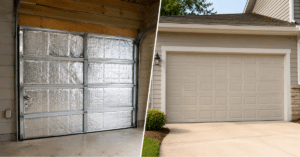
Insulated vs Non-Insulated Garage Doors New Braunfels TX
Material Durability Under Thermal Stress
Different door materials respond to heat stress in fundamentally different ways. Steel, aluminum, wood composite, and full wood each have distinct thermal performance profiles. The best hot-climate door material is one that maintains its geometry, finish integrity, and structural performance through thousands of heat-cool cycles across Texas summers and winters.
Finish and Coating Quality for UV and Heat Exposure
The sun in Central Texas delivers intense UV radiation alongside its heat. Door finishes that are not rated for high UV exposure fade, chalk, and degrade within two to three seasons. Primer adhesion fails, allowing rust to form at any surface breach. A door with a premium baked enamel or powder-coated finish specifically rated for high UV exposure maintains its appearance and its protective barrier for significantly longer in Texas conditions.
Weather Seal Performance at High Temperatures
Weather stripping and bottom seals made from standard rubber compounds harden and lose flexibility at sustained high temperatures. A hot-climate door needs weather seals made from EPDM rubber or other thermally stable compounds that maintain their sealing effectiveness through Texas summer conditions rather than baking into brittle, gap-creating remnants within two seasons.
Best Door Materials for Hot Climates
Steel — The Best Overall Choice for Texas Heat
Insulated steel is the top-performing material for hot Texas climates across every performance dimension that matters for long-term ownership. Here is why.
Steel does not absorb moisture. Unlike wood, it does not swell in humid months or shrink in dry ones. Its dimensional stability across the wet-dry cycling of Texas seasons means panel joints stay tight, hardware stays aligned, and tracks stay true year after year.
Steel’s thermal conductivity is high — meaning a bare steel panel would transfer heat readily. However, a polyurethane-insulated steel door turns this characteristic into an advantage. The insulation core buffers the temperature difference between the outer skin and the inner face, dramatically reducing heat transfer into the garage while also preventing the differential thermal expansion that causes warping in uninsulated hollow panels.
Steel panels with a baked enamel or galvanized coating resist corrosion from the humidity-heat combination that characterizes Texas summers. Factory finishes on quality steel doors are engineered for UV stability, maintaining color accuracy and surface integrity for ten to fifteen years under direct sun exposure.
For New Braunfels homeowners, an insulated steel door with a polyurethane foam core is the baseline recommendation for any attached garage.
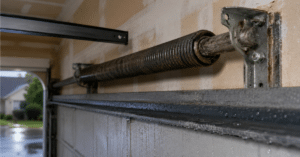
How Humidity Affects Garage Door Springs New Braunfels TX
Aluminum — Lightweight but Limited in Heat
Aluminum garage doors offer genuine advantages in coastal environments where salt air corrosion is the primary threat. In a hot inland climate like New Braunfels, aluminum’s performance profile is less compelling.
Aluminum has a higher thermal expansion coefficient than steel — meaning it expands and contracts more per degree of temperature change. In a Texas garage that swings from 50°F in January to 140°F in July, aluminum panels experience significant dimensional movement that stresses fasteners, warps panel geometry, and degrades weather seal contact over time.
Full-view aluminum doors — popular for their contemporary aesthetic with glass panel inserts — perform better than solid aluminum panels in hot climates because the glass provides thermal mass and the frame construction handles expansion more predictably. However, for thermal performance and long-term dimensional stability, insulated steel outperforms aluminum in pure hot-climate conditions.
Wood — Highest Maintenance, Shortest Lifespan in Texas
Solid wood garage doors are beautiful. They are also the most demanding material to maintain in a Texas climate and the most likely to require expensive repairs or full replacement within ten to fifteen years of installation in the Hill Country.
Wood absorbs moisture. In New Braunfels, where Guadalupe River valley humidity regularly exceeds 75% in summer months, wood panels swell measurably during wet periods and contract during dry ones. Repeated dimensional cycling loosens fasteners, opens panel joints, and gradually warps sections away from their original geometry.
Texas heat dries wood surfaces aggressively during summer afternoons. Without consistent resealing and repainting every two to three years, wood panels crack at the surface, allowing moisture infiltration that accelerates deterioration from the inside. A wood door that is not religiously maintained in Central Texas typically requires panel replacement within ten years and full door replacement within fifteen.
For homeowners committed to the wood aesthetic, wood composite doors — steel or fiberglass construction with a wood-grain embossed finish — deliver the visual appearance of wood with dramatically superior heat and moisture resistance.
Wood Composite and Fiberglass — Good Middle Ground
Wood composite doors use a steel or fiberglass structural core with a wood-grain surface texture. They offer the aesthetic appeal of wood without its moisture absorption and dimensional instability. In Texas heat, a fiberglass composite door with polyurethane insulation performs comparably to an insulated steel door in thermal resistance while providing superior dent resistance.
Fiberglass composite does not rust — an advantage in high-humidity environments where surface finish breaches could allow steel corrosion. However, quality fiberglass doors in the R-12 to R-16 range are typically priced higher than comparable insulated steel options, making them a premium choice rather than a default recommendation.
Best Garage Door Brands for Hot Climates
New Braunfels Garage Door Repair installs and services all major brands. Here is how each performs specifically in hot climate conditions.
CHI Overhead Doors — Top Performance in Texas Heat
CHI’s insulated steel door lineup delivers outstanding hot-climate performance. Their Model 2250 and 2283 series use polyurethane foam cores that achieve R-values between R-12 and R-17, with tested assembly values that hold up accurately in real-world conditions. CHI’s galvanized steel construction and high-UV-stability paint systems maintain finish integrity in direct Texas sun better than most competitors at similar price points.
CHI doors are manufactured to tight dimensional tolerances, meaning panel geometry stays consistent across the thermal cycling that Texas seasons impose. For New Braunfels homeowners prioritizing long-term performance and minimal maintenance, CHI is our most frequently recommended brand.
Clopay — ENERGY STAR Certified for Verified Thermal Performance
Clopay’s insulated door lineup includes ENERGY STAR-certified options with independently verified R-values — meaning the performance specification has been tested and confirmed rather than self-reported. Their Classic Steel Plus series with polyurethane insulation delivers R-12 to R-18 assembly values depending on panel thickness and configuration.
Clopay’s Coachman series offers carriage house styling with polyurethane insulation — a popular choice for New Braunfels homeowners who want Hill Country aesthetic appeal combined with legitimate hot-climate thermal performance. Their finish systems are specifically engineered for UV stability, making them a strong choice for south and west-facing garages with intense afternoon sun exposure.
Amarr — Reliable Performance Across Price Points
Amarr’s insulated steel lineup covers a broad range from entry-level polystyrene insulation to premium polyurethane options in their Stratford and Heritage series. For hot-climate performance, Amarr’s polyurethane-insulated doors deliver consistent R-values and durable finish systems at competitive price points.
Amarr’s manufacturing quality control produces consistent panel dimensions that maintain weather seal contact effectively through Texas seasonal movement. Their Intellicore polyurethane system bonds the foam core to both steel skins in the same integrated construction that CHI and Clopay use, providing structural rigidity alongside thermal performance.
Wayne Dalton — Strong Thermal Performance with Proprietary Spring System
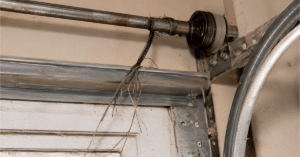
Wayne Dalton’s ThermoSteel and Model 9100 series deliver strong thermal performance with polyurethane insulation and tested R-values in the R-12 to R-18 range. Wayne Dalton doors use their proprietary Torquemaster spring system enclosed inside the torsion bar — a design that provides a cleaner appearance above the door opening.
New Braunfels Garage Door Repair specializes in Wayne Dalton installation and service, including Torquemaster spring assessment and conversion for homeowners who prefer standard torsion spring configuration. Wayne Dalton Torquemaster Conversion New Braunfels TX. If you are considering a Wayne Dalton door, our team handles every aspect of the installation and ongoing service with direct brand expertise.
Specifications to Insist On for a Hot Climate Garage Door
When comparing specific door options, these specifications separate doors that genuinely perform in Texas heat from those that are marketed for general use but underperform in extreme conditions.
Polyurethane foam core over polystyrene board. Polyurethane bonds to both steel skins, adds structural rigidity, and achieves higher R-values per inch. Polystyrene is better than nothing but falls short of polyurethane performance in both thermal resistance and panel strength.
Assembly R-value of 12 or higher. Ask specifically for the tested assembly R-value — not the core material R-value. Some doors advertise their insulation material’s peak R-value while the actual door assembly achieves significantly less due to thermal bridging at the steel frame sections.
Galvanized or hot-dipped steel with baked enamel finish. Galvanization provides corrosion resistance at the base metal level. Baked enamel provides UV stability and physical durability at the surface level. Both are necessary for long-term appearance and performance in Texas heat and humidity.
EPDM rubber bottom seal and perimeter weatherstripping. EPDM rubber maintains flexibility at temperatures up to 250°F — well above anything a Texas garage achieves. Standard rubber compounds begin hardening at sustained temperatures above 120°F. The difference in seal performance after two Texas summers is significant.
Steel thickness of 25 gauge or heavier. Thinner steel panels flex more under wind load and thermal stress. 25-gauge steel provides a meaningful improvement in panel rigidity over 27 or 28 gauge, which compounds the structural benefit of the polyurethane core.
What Color and Finish to Choose for Texas Sun Exposure
Door color affects thermal performance in a way that most homeowners underestimate. Dark colors absorb significantly more solar radiation than light colors — a basic principle of radiative heat transfer that applies directly to garage door surface temperatures.
A dark brown or black garage door facing west in New Braunfels reaches surface temperatures 30°F to 50°F higher than a white or light beige door under identical sun exposure conditions. That surface temperature difference affects the interior heat load the door transfers, the rate of finish degradation, and the thermal stress on the panel structure.
For hot-climate installations — particularly south or west-facing garages — lighter colors with high solar reflectance deliver measurably better thermal performance and longer finish lifespan. Many manufacturers now offer doors with solar-reflective finish technology that achieves the visual appearance of darker colors while maintaining significantly lower surface temperatures. Ask specifically about solar reflectance index when choosing a finish for a Texas garage.
New Braunfels Garage Door Repair: Hot Climate Door Installation
New Braunfels Garage Door Repair selects, sources, and installs the best garage doors for hot climates across New Braunfels, Canyon Lake, Seguin, San Marcos, Cibolo, Schertz, Garden Ridge, and every surrounding community. Every installation begins with an honest assessment of your garage’s specific heat exposure, orientation, and mechanical system requirements — so the door you choose is genuinely the right door for your situation.
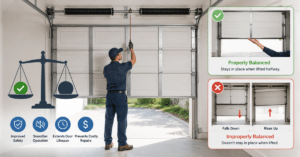
We match each new door installation with correctly sized springs calibrated for the door’s actual weight, appropriate opener selection for its load and cycle requirements, and quality weatherstripping rated for Texas temperature ranges. A door that performs well starts with hardware that matches it correctly — and we handle every component of that match.
Installation Services Include:
- New garage door installation — all brands, insulated and non-insulated
- Garage door replacement — full system assessment before installation
- Spring sizing and installation for new door specifications
- Opener compatibility and upgrade service
- Wayne Dalton Torquemaster installation and conversion
- EPDM weatherstripping and bottom seal installation
- Full hardware installation including tracks, cables, and brackets