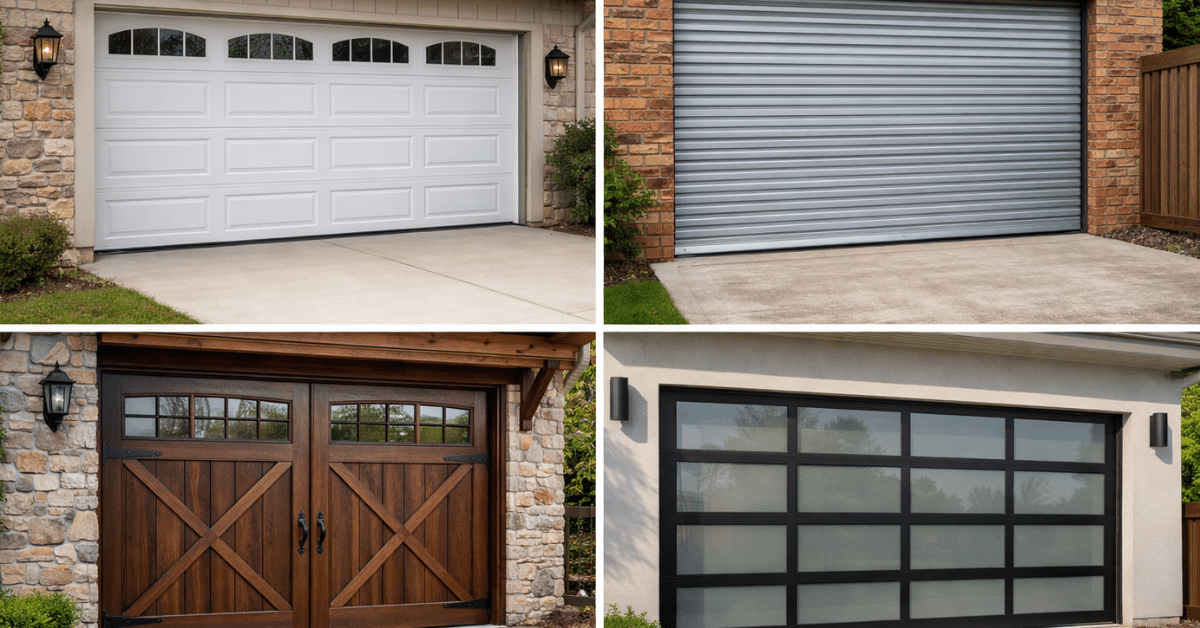
Choosing the right garage door is more important than most homeowners realize. It affects not only your home’s curb appeal but also security, insulation, and daily convenience. With so many options available today, understanding the different types of garage doors can help you make a smart, long-term investment.
In this guide, we’ll break down the most popular garage door types, their advantages and disadvantages, and when each option works best. Whether you’re upgrading your home or installing a new system, this article will give you everything you need to know.
Why Understanding Different Types of Garage Doors Matters
Before diving into specific styles, it’s important to understand why your choice matters. A garage door is one of the largest moving parts of your home. It impacts:
- Energy efficiency
- Security and safety
- Maintenance costs
- Overall property value
Therefore, selecting the right option from the different types of garage doors ensures long-term performance and satisfaction.
1. Sectional Garage Doors
Sectional garage doors are the most common type used in residential homes. They consist of horizontal panels connected with hinges. These panels move upward along tracks and rest parallel to the ceiling when open.
Pros
- Space-efficient design
- Excellent insulation options
- Suitable for most home styles
- Easy to automate
Cons
- Requires ceiling space for tracks
- Can be expensive depending on material
- Repairs may involve replacing multiple panels
Best For
Homeowners who want a modern, reliable, and versatile option. Among the different types of garage doors, this is the most widely recommended.
2. Roll-Up Garage Doors
Roll-up doors are made of narrow slats that roll into a compact coil above the opening. They are commonly used in commercial properties but are also gaining popularity in residential settings.
Pros
- Durable and long-lasting
- Ideal for limited ceiling space
- Low maintenance
- Strong security features
Cons
- Higher upfront cost
- Limited design options
- Not as visually appealing for homes
Best For
Commercial buildings or homes with limited overhead space. This is one of the most durable different types of garage doors available.
Garage Door Maintenance Checklist for Homeowners
3. Side-Hinged Garage Doors
These doors swing open like traditional doors. They are usually made of wood or steel and open outward from the center.
Pros
- Simple design with fewer moving parts
- Easy manual operation
- Classic, traditional look
Cons
- Requires driveway space to open
- Less secure than modern options
- Not ideal for automated systems
Best For
Homes with a classic or vintage style. Among the different types of garage doors, this option suits traditional aesthetics best.
4. Slide-to-the-Side Garage Doors
These doors operate by sliding horizontally along a track mounted on the wall. They were one of the earliest garage door designs.
Pros
- No ceiling track required
- Smooth and quiet operation
- Good for garages with low ceilings
Cons
- Requires wall space
- Limited availability
- Can be more expensive
Best For
Garages with limited ceiling height. This is one of the less common but practical different types of garage doors.
5. Tilt-Up Canopy Garage Doors
These doors are made from a single solid piece that tilts outward and lifts into the garage, leaving part of the door extending outside.
Pros
- Affordable option
- Simple mechanism
- Quick installation
Cons
- Takes up space in front of the garage
- Limited insulation
- Less secure
Best For
Budget-conscious homeowners. Among the different types of garage doors, this is one of the simplest designs.
6. Tilt-Up Retractable Garage Doors
Similar to canopy doors, these also consist of a single panel. However, they fully retract into the garage rather than sticking out.
Pros
- More secure than canopy doors
- Smooth operation
- Compatible with automation
Cons
- Requires more space inside the garage
- Higher cost than canopy type
- Complex installation
Best For
Homeowners who want a one-piece door with better functionality. This is a more advanced option among the different types of garage doors.
7. Carriage-Style Garage Doors
Inspired by old carriage houses, these doors mimic the look of swing-out doors but usually operate like sectional doors.
Pros
- Elegant, high-end appearance
- Adds curb appeal
- Available in modern automated versions
Cons
- Expensive compared to standard options
- Requires maintenance for wood versions
- Heavier than other types
Best For
Luxury homes or those aiming for a rustic or classic aesthetic. This is one of the most visually appealing different types of garage doors.
8. Glass Garage Doors
These doors feature aluminum frames with glass panels, offering a sleek and modern look.
Pros
- Modern and stylish design
- Allows natural light
- Rust-resistant materials
Cons
- Less privacy
- Poor insulation unless upgraded
- Higher cost
Best For
Contemporary homes and commercial spaces. Among the different types of garage doors, this is the most modern option.
Steel vs Wooden Garage Doors – Which Is Better?
Comparing Materials Used in Garage Doors
When exploring different types of garage doors, material choice is just as important as design.
Steel
- Strong and durable
- Low maintenance
- Can be insulated
Wood
- Natural and attractive
- Customizable
- Requires regular maintenance
Aluminum
- Lightweight and rust-resistant
- Ideal for modern designs
- Less durable than steel
Fiberglass
- Resistant to dents and corrosion
- Lightweight
- May fade over time
How to Choose the Right Garage Door
Choosing among the different types of garage doors depends on several factors:
1. Budget: Some doors, like tilt-up canopy, are affordable, while others like glass or carriage-style doors cost more.
2. Space Availability: Consider ceiling and driveway space before selecting a door type.
3. Climate: Insulated doors are better for extreme weather conditions.
4. Maintenance: Wood doors require more upkeep than steel or aluminum.
5. Security: Modern sectional and roll-up doors offer better security features.
Maintenance Tips for Long-Term Performance
Regardless of which option you choose from the different types of garage doors, proper maintenance is essential:
- Lubricate moving parts regularly
- Inspect springs and cables
- Clean and repaint when necessary
- Test safety features frequently
These steps help extend the lifespan of your garage door and reduce repair costs.
Final Thoughts
Understanding the different types of garage doors allows you to make a well-informed decision that fits your needs, budget, and home design. Each type comes with its own advantages and drawbacks, so it’s important to evaluate your priorities carefully.
For most homeowners, sectional garage doors offer the best balance of functionality, security, and cost. However, if aesthetics or space constraints are your main concern, other options like carriage-style or roll-up doors may be more suitable.
Ultimately, the right garage door is one that enhances your home’s value while providing reliable performance for years to come.