A garage door grinding squeaking noise is your system’s way of telling you something is wrong. These sounds do not appear randomly — every grind, squeak, and rattle points to a specific mechanical cause somewhere in the door’s components. The good news is that most causes are straightforward. Catching them early costs far less than ignoring them until a roller fails, a gear strips, or a hinge snaps mid-travel. This guide covers every reason your garage door makes grinding or squeaking noises and tells you exactly what to do about each one.
What Your Garage Door Grinding Squeaking Noise Is Trying to Tell You
Different sounds point to different problems. Identifying yours first makes the diagnosis faster.
A grinding sound during travel signals metal-on-metal contact — worn rollers, dry tracks, or a failing opener gear. A squeaking sound points to friction at hinge pivot points or dry spring coils rubbing against each other. A rattling noise suggests loose hardware vibrating during operation. A popping or banging sound often means spring tension problems that need immediate professional attention.
Matching your specific sound to its category narrows the cause before you even open the garage door panel.
Cause #1 — Worn or Damaged Rollers
Worn rollers are the most common source of a garage door grinding squeaking noise. Steel rollers without sealed ball bearings wear down at their edges over time. Once flattened, they drag against the track wall instead of rolling — creating a consistent metal-on-metal grinding sound throughout the door’s travel.
How to Spot Roller Damage
Inspect each roller while the door sits stationary. Look for flat spots on the wheel edge, cracked nylon, missing ball bearings, or wheels that wobble when pushed by hand. Any of these signs means the roller is dragging, not rolling.
Replacing a full set of rollers is one of the most affordable repairs on the entire garage door system — and one of the highest-impact fixes for noise reduction.
Cause #2 — Dry Hinges and Lack of Lubrication
Every panel on your garage door connects to the next via a hinge. Those hinges pivot thousands of times per year. Without adequate lubrication, the pivot motion generates a persistent squeaking sound that travels through the entire door structure.
When Lubrication Is Not Enough
A hinge that has simply run dry responds immediately to a fresh application of silicone or white lithium grease. However, a hinge with worn pivot pins grinds rather than squeaks — even after lubrication. Run your hand along each hinge while the door moves slowly. Any hinge that catches, feels rough, or stiffens mid-travel needs replacement, not just lubrication.
Do not use WD-40 on hinges. It is a solvent, not a lubricant, and it attracts dust that compounds the friction problem within weeks.
Cause #3 — Dry Torsion Spring Coils
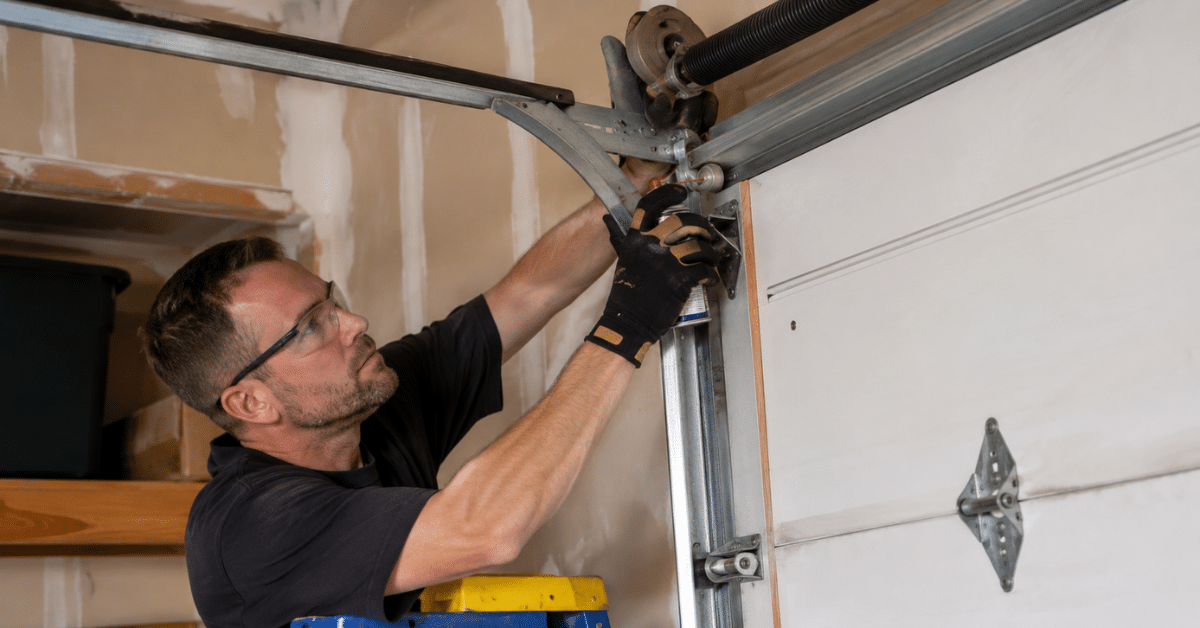
The torsion spring above your door winds and unwinds with every single cycle. Without regular lubrication, its coils rub against each other — producing a distinct squeaking sound during both opening and closing travel.
Apply a lithium-based lubricant directly along the full length of the spring coils. One application typically silences spring squeak immediately. This is also the most frequently skipped step in residential garage door maintenance — which is why spring squeak is so common.
Lubricate the spring every six months as part of your regular maintenance routine. If the spring shows visible gaps in its coils or uneven tension, stop operating the door and call a professional — that is a structural issue, not a lubrication issue.
Cause #4 — Opener Drive Gear or Chain Issues
Worn Drive Gear
A grinding noise that happens specifically when the opener engages — at the very start or end of operation — points to a worn drive gear inside the motor unit. Chain-drive and gear-drive openers use internal gears that wear down over years of use. Once worn, they slip and grind rather than engaging cleanly.
This is an internal opener repair. The gear set is replaceable without buying a new unit in most cases, but it requires disassembling the motor housing and should be handled by a technician.
Loose Chain Tension
A chain-drive opener with a loose chain slaps against the rail during operation, generating a grinding or rattling sound throughout the cycle. Check chain tension visually — it should sag no more than half an inch below the rail at its midpoint. Your opener manual will show the adjustment procedure.
Belt-drive openers eliminate chain noise entirely. If noise is a recurring issue and your opener is aging, a belt-drive upgrade is worth considering alongside any repair.
Cause #5 — Track Debris, Buildup, and Loose Hardware
Debris Inside the Tracks
Tracks collect dried lubricant, dust, and small debris over time. When a roller hits that buildup during travel, it generates a grinding or scraping sound — often at the exact same point in the travel path every cycle. That pattern is the diagnostic clue: noise at the same spot every time almost always means a track obstruction or a dent at that location.
Wipe both tracks completely clean with a dry rag from top to bottom. Do not apply lubricant inside the tracks — this causes rollers to slip and worsens noise and wear simultaneously.
Loose Hardware
Loose bolts, brackets, and fasteners vibrate during door travel and produce rattling and grinding sounds that mimic mechanical failure. Tighten every visible bolt and bracket with a socket wrench before assuming a deeper cause. Track mounting brackets and hinge bolts are the most common culprits.
DASMA (Door & Access Systems Manufacturers Association) — industry maintenance guidelines
The 5-Step Fix for a Noisy Garage Door
Work through these steps in order before calling a technician. They resolve the majority of grinding and squeaking complaints.
Step 1 — Clean both tracks with a dry cloth. Remove all debris and buildup. Check for dents at the point where noise occurs most consistently.
Step 2 — Lubricate rollers, hinges, the torsion spring, and bearing plates with silicone spray or white lithium grease. Never lubricate inside the track channel itself.
Step 3 — Tighten all hardware — every bolt, bracket, and fastener along both sides of the door system.
Step 4 — Check opener chain tension and adjust per your opener manual if the chain sags more than half an inch below the rail.
Step 5 — Run five full cycles after completing the above. Lubrication-related noise disappears almost immediately. Any noise that persists after this sequence is mechanical and needs professional diagnosis.
Frequently Asked Questions
Q: Is a garage door grinding squeaking noise dangerous?
A: Not immediately — but worn rollers and dry hinges accelerate component failure fast. Left alone, they lead to rollers jumping tracks or hinges snapping mid-travel.
Q: Can I fix the noise myself?
A: Yes for lubrication, track cleaning, and tightening hardware. Internal opener gear repairs and spring adjustments always need a professional.
Q: How often should I lubricate my garage door?
A: Every six months — or quarterly in dusty or high-humidity environments. Consistent lubrication prevents most noise complaints before they start.
Q: Why does my garage door squeak only in cold weather?
A: Cold thickens lubricants and stiffens metal components. A fresh application of low-temperature lubricant on springs and hinges before winter typically solves it.
Q: When should I call a professional for garage door noise?
A: Call when noise persists after the 5-step fix, when grinding comes specifically from the opener unit, or when any component shows visible wear or damage.
The Bottom Line
A garage door grinding squeaking noise is a maintenance signal — not something to ignore until it becomes a breakdown. Start with the five-step fix: clean the tracks, lubricate every moving part, tighten all hardware, check chain tension, and run a test cycle. Most noise problems disappear in under 30 minutes of basic maintenance. When the noise stays, the cause is mechanical and needs professional diagnosis before it turns into a costlier repair. Book a professional inspection today and get your garage door running quietly and smoothly again.