When it comes to garage door systems, springs play a critical role in smooth and safe operation. Yet, many homeowners don’t fully understand how they work. If you’ve ever wondered about torsion vs extension springs, you’re not alone.
Both types of springs are designed to counterbalance the weight of your garage door, making it easier to open and close. However, they differ significantly in design, performance, safety, and lifespan. In this guide, we’ll break down everything you need to know about torsion vs extension springs so you can make an informed decision.
Why Understanding Torsion vs Extension Springs Matters
Garage door springs handle a tremendous amount of tension. Choosing the wrong type can lead to:
- Poor performance
- Increased maintenance
- Safety risks
Therefore, understanding torsion vs extension springs is essential for both new installations and replacements.
What Are Torsion Springs?
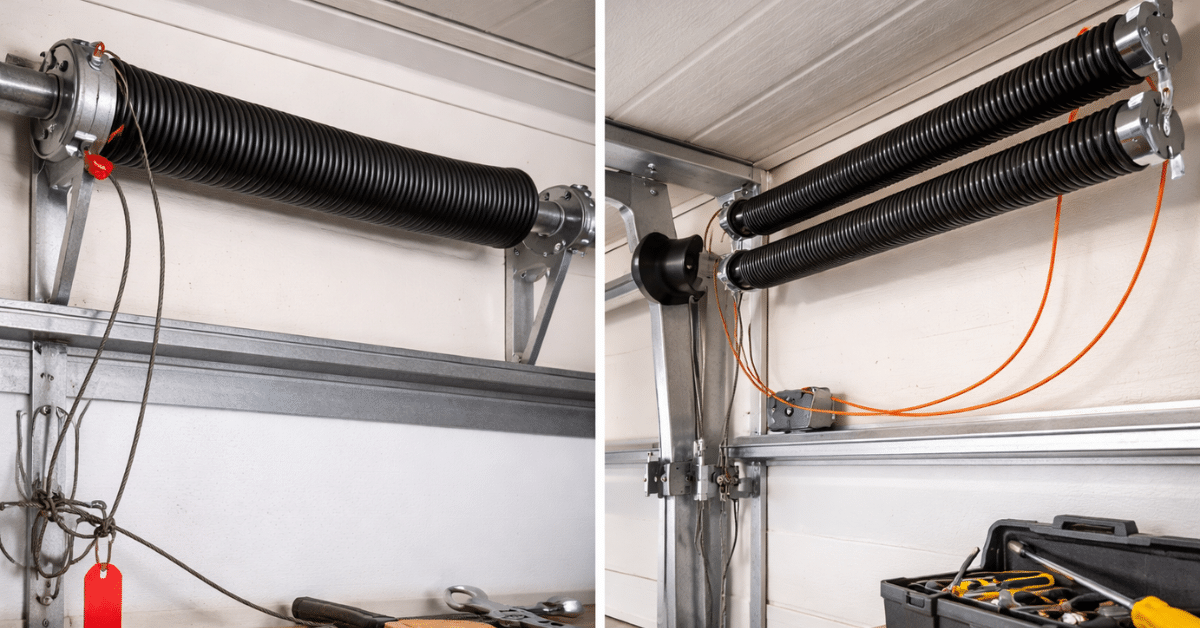
Torsion springs are mounted horizontally above the garage door opening. They work by twisting (or “torquing”) to store mechanical energy.
How Torsion Springs Work
When the garage door closes, the torsion spring winds up and stores energy. When the door opens, the spring unwinds and releases that energy, lifting the door smoothly.
Pros of Torsion Springs
- Longer lifespan (typically 15,000–20,000 cycles)
- Smoother operation
- Better balance and control
- Enhanced safety features
Cons of Torsion Springs
- Higher upfront cost
- Requires professional installation
- More complex system
Best Use Case
Torsion springs are ideal for modern homes and heavier garage doors. When comparing torsion vs extension springs, torsion systems are generally considered the superior option.
How To Repair Garage Door Spring?
What Are Extension Springs?
Extension springs are located on either side of the garage door, running parallel to the horizontal tracks. They stretch and contract to create lifting force.
How Extension Springs Work
When the door closes, extension springs stretch and store energy. When the door opens, they contract and release that energy to lift the door.
Pros of Extension Springs
- Lower initial cost
- Simpler design
- Easier to install
Cons of Extension Springs
- Shorter lifespan (around 10,000 cycles)
- Less smooth operation
- Higher safety risks if they break
- Requires safety cables
Best Use Case
Extension springs are suitable for lighter garage doors and budget-conscious homeowners. However, in the debate of torsion vs extension springs, they are considered less advanced.
Key Differences Between Torsion vs Extension Springs
Understanding the differences between torsion vs extension springs helps you choose the right system for your needs.
1. Location and Design
- Torsion Springs: Mounted above the door
- Extension Springs: Located along the sides
This difference affects how each system operates and how much space it requires.
2. Performance and Smoothness
Torsion springs provide smoother and more controlled movement. In contrast, extension springs can cause jerky motion.
3. Lifespan
- Torsion Springs: Last longer
- Extension Springs: Wear out faster
This is a major factor when comparing torsion vs extension springs.
4. Safety
Torsion springs are generally safer because they stay in place if they break. Extension springs, however, can snap and cause damage unless safety cables are installed.
5. Cost
- Torsion Springs: Higher upfront cost
- Extension Springs: More affordable initially
However, long-term costs may balance out due to durability.
6. Maintenance
Torsion systems require less frequent maintenance. Extension springs need regular inspection and adjustments.
How To Replace Old Style Garage Door Springs?
Which Is Better: Torsion vs Extension Springs?
The answer depends on your needs.
Choose Torsion Springs If:
- You want durability and longevity
- You prefer smooth and quiet operation
- Safety is a top priority
- You have a heavier garage door
Choose Extension Springs If:
- You are on a tight budget
- You have a lightweight garage door
- You need a simple system
In most cases, when evaluating torsion vs extension springs, torsion springs are the preferred choice for modern homes.
Safety Considerations for Torsion vs Extension Springs
Safety is one of the most important aspects when comparing torsion vs extension springs.
Torsion Spring Safety
- Controlled movement
- Less risk of flying parts
- Safer breakage behavior
Extension Spring Safety
- Must use safety cables
- Higher risk of snapping
- Requires careful maintenance
Never attempt to repair or replace garage door springs yourself. These components are under extreme tension and can cause serious injury.
Cost Comparison: Torsion vs Extension Springs
Understanding cost differences is crucial when analyzing torsion vs extension springs.
Initial Costs
- Extension springs are cheaper upfront
- Torsion springs cost more initially
Long-Term Value
Torsion springs often provide better value due to:
- Longer lifespan
- Fewer repairs
- Better performance
Maintenance Tips for Both Spring Types
Proper maintenance extends the life of your garage door system.
General Tips
- Lubricate springs regularly
- Inspect for wear and tear
- Test balance periodically
- Schedule professional inspections
Following these steps ensures your system performs well, regardless of your choice in torsion vs extension springs.
Signs Your Garage Door Springs Need Replacement
Recognizing early warning signs can prevent costly damage.
Common Signs
- Door opens unevenly
- Loud noises during operation
- Slow or jerky movement
- Visible gaps in the spring
If you notice any of these issues, it’s time to evaluate your system and reconsider torsion vs extension springs.
Final Thoughts
Understanding torsion vs extension springs is essential for choosing the right garage door system. While both types serve the same purpose, they differ in performance, safety, and durability.
Torsion springs offer smoother operation, longer lifespan, and better safety, making them the preferred option for most homeowners. On the other hand, extension springs provide a more affordable solution for simpler needs.
Ultimately, the best choice depends on your budget, garage door type, and long-term expectations. By carefully evaluating these factors, you can select a system that ensures safety, efficiency, and reliability for years to come.